My Books

  • John Donne (my best)
  • Shakespeare
  • Anything by Terry Pratchett
  • Lord of the Rings
  • The Little White Horse
  • Wind in the Willows
  • Secret Garden
Showing posts with label The Himmalayan Hotel.. Show all posts

Thursday, 5 August 2010

LIFE AND DEATH


I was going to write a short apology for the grimness of the subject matter but you see it really isn't a grim (forgive the pun) tale. If it was the word life would almost certainly not be in the title.


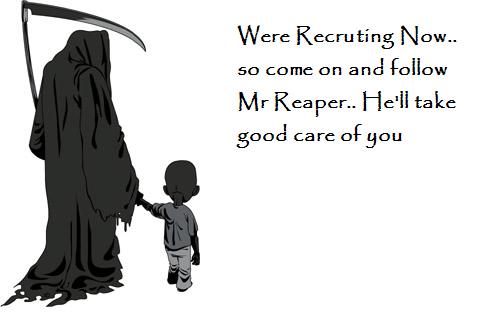
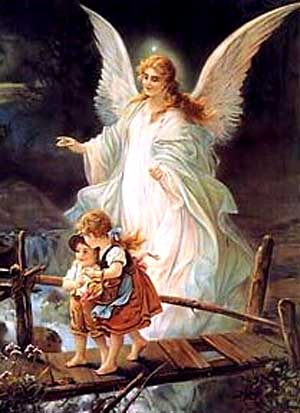
These two images represent our Western European way of anthropomorphising Death. So is using the capital letter. The big D. Death comes as a man draped in black with a sickle to cut away the soul or as a lovely lady angel with her wings sheltering the children as they leave life.

Auntie Annie refused point blank to believe in an after life and this after a lifetime spent in the mountains where death and rebirth are the expected norm. At night from the veranda of the hotel you could look across the valley to the hills on the other side. No tracks  or villages there and yet every night almost dancing lights could be seen across the mountainside. The hill people were sure that these were spirit lights, souls travelling to their next incarnation. Annie would have none of it - poachers or thieves - they know the superstitions and so know there will be no-one brave enough to take them on. And she would turn away and pour everyone another large Scotch. My mother, who was always witchy , used to look and say to me, " I'm not so sure." On one of her 'picnics' with the General they crossed the valley and she came saying that were no pathways, no sign of people anywhere that could explain the lights. Annie would have none of it. Today, what we did today was all that counted.


As a child this quite frightened me: if I am honest it still does. That this is all, there is no other purpose than to evolve. I love the concept of Carpe Diem and I try very hard to practise it but still... something more surely.


An American friend came to visit, Migla, and Chogyal arranged a trip to the Nathu La for her, Annie and Vicky. They were to stay the night at a Dak Bungalow just below the pass and rise to see, "jocund day stand tiptoe on the mountain top." (Shakespeare).


It had been a a tiring day and a long drive and then walk to the bungalow. The three ladies had a drink and a light meal and settled themselves down for the night. They had with them only a driver and their  bearer Kancha. These two opted to take the jeep back down to the nearest village and sleep there leaving the three quite happily alone on the edge of Tibet at a height of about eight and half thousand feet.


Annie woke with a jump: she thought she had heard the latch on her door. She sat up and lit the candle by the bed. At the end of her bed stood a smiling lama. A Bhutia she thought, and smiled back a little uncertainly. She may have been 72 and he may have been a lama but she felt a faint chill of fear and uncertainty. 

She said later that she was not afraid after that first moment of concern. He smiled at her giving the Tibetan with his tongue out so she could see he was not a demon. They looked at one another for awhile and then she said he began to fade. He smiled again and walked away through the closed door.

Both MIgla and Vicky agreed that they were completely alone. When Kancha and the driver returned in the morning they admitted that they had slept in the village because the stories were that the bungalow had been built on a monastery and many lamas had been seen.

As adamant as Annie had been that there were no ghosts she now became even more adamant that she had seen a ghost and that he had come to her specifically. Strangely she then admitted that she had always feared death but the lama had given her comfort. It was a remarkable volte face for a practical, intelligent woman who had vehemently held the opposite view for all of her adult life.

Some three years later Annie died. Her body was tired and she missed Frank. She didn't fight very hard. It was decided she must have a funeral worthy of such a remarkable lady. Vera and Vicky chose a beautiful new nightdress from Saks that Migla had bought Annie for Christmas that year and dressed in this surrounded by marigolds she was carried down to the ghat to be cremated. All religions were represented, her brother Jo worked at the Kalimpong Homes so there was Calvinist minister, the Swiss brothers (Franciscan) who made the cheese, the chief Brahmin, the Abbot and lamas from the gompa and most of Kalimpong.  She lay serenely on her pyre and Desla, as honoury son was given the torch to start the cremation. All was going well until someone noticed that Annie was not burning. The nightdress, you see, was flame retardant. The pyre had to be put out and Annie carried back up the hill to be redressed in something a little more flammable. As Desla said, Annie's last joke. And we could laugh all of us because it sort of confirmed her smiling lama story that there was really nothing to fear.

If I ended there you would have a ghost story with a moral: never try to burn someone in flame retardant polycotton. But I can't end it there. There is another part to this story and it is the bit that many of you will shake your heads and say, oh dear, she's lost the plot a bit. I won't apologise and I will admit that this next bit sounds, to use the mountain word, lata.

From as far back as I can remember I have had a recurring dream. In it I am walking up a winding mountain path. At the top and beyond is a beautiful, tranquil, green valley. In the dream I am never alone, always with someone, and when we reach the top they turn me to face down the mountain and watch me waving as I leave them.  It is always someone different, someone I love and care about and when I wake I know that they have into the valley and are no longer here with us: they are dead. The first time I remember having it was when my mother's beloved Aunt Kathleen died. I didn't say anything because it very personal and I assumed that she had come and said goodbye to my mother too.

Some years later I had the dream but this time with Desmond, and we didn't make all of the climb. He told me he was going to rest for a while and to go back, he would be alright. I woke up and ran into Mum's room demanding she phone him. She was bemused but I was so insistant that she did. He was having a heart attack and because of me my father was able to get to him and save his life. The dreams came when Annie died and darling Vicky. And when Desmond really did leave us I walked with him to the top of the hill and knew some day before his obituary appeared in the newspapers. Mum always said, "If I go up there and send you away don't tell me. I don't want to know." She was very afraid of death. As it happens I didn't dream her going, but then I had anticipated it for eighteen months and on the day itself I knew without a shadow of doubt that she was leaving me. And she did.

The only other time the dream failed to manifest itself was when my brother in law died leaving my sister a widow at 39 with two little girls under thirteen. After the funeral I dreamt about him, not in the valley, but in his garden standing beside me watching his girls through the window. He made me promise to look out for them.

After Mum died I couldn't feel her, couldn't reach her. And I wanted more than anything in the world to be able to speak to her, know that she was alright. I wanted to know that she had reached the valley and all was well. There was nothing. Alain, a darling friend adopted by Mum at twenty, felt her all the time. My sister did. Me - nothing. I was pretty firmly heading for the Annie Perry view. This was it and she was truly gone forever.

As most of you know I had a breakdown and had to stop teaching: with loss comes loss. I did the full bereavement counselling thing and managed to appear as a reasonably functioning recovering depressant.

And then one night I was walking up the mountain and on the crest of the hill she was waiting for me. She had with her a little green MG and we drove down into the valley and I asked was this it, could I stay? Not yet she said: this is to show you that you can stop worrying. She took me to a, not a house, more like a pavilion, with canals of blue water and silken hangings in different colours. All of the dogs were there; I met Jumbo her first dog. I can't tell you what we talked about, everything and anything. She said I had to let her go - there was so much here she wanted to do and that she and Desmond had talked about it and they thought they would rather like to come back and give it another go.

And then we got into the car and drove round the valley very fast until we reached the ridge again. She hugged me and told me she loved me and to wait for she would always find me. And then she laughed and said Annie's Lama is here - he is a lovely man and all the aunties love him.

Freud, Jung of course I know that it sounds like wish fulfilment. Maybe it was but in the dark of last year's winter Anna had a daughter. While I was homeless and sofa surfing Katy Joy arrived. And you can laugh and scoff and say I'm ad but that little girl knows me as well as I know her. 

So you see Annie was right, we are sent markers to help us see. We just have to remember to keep our eyes, both of them and the third, open.

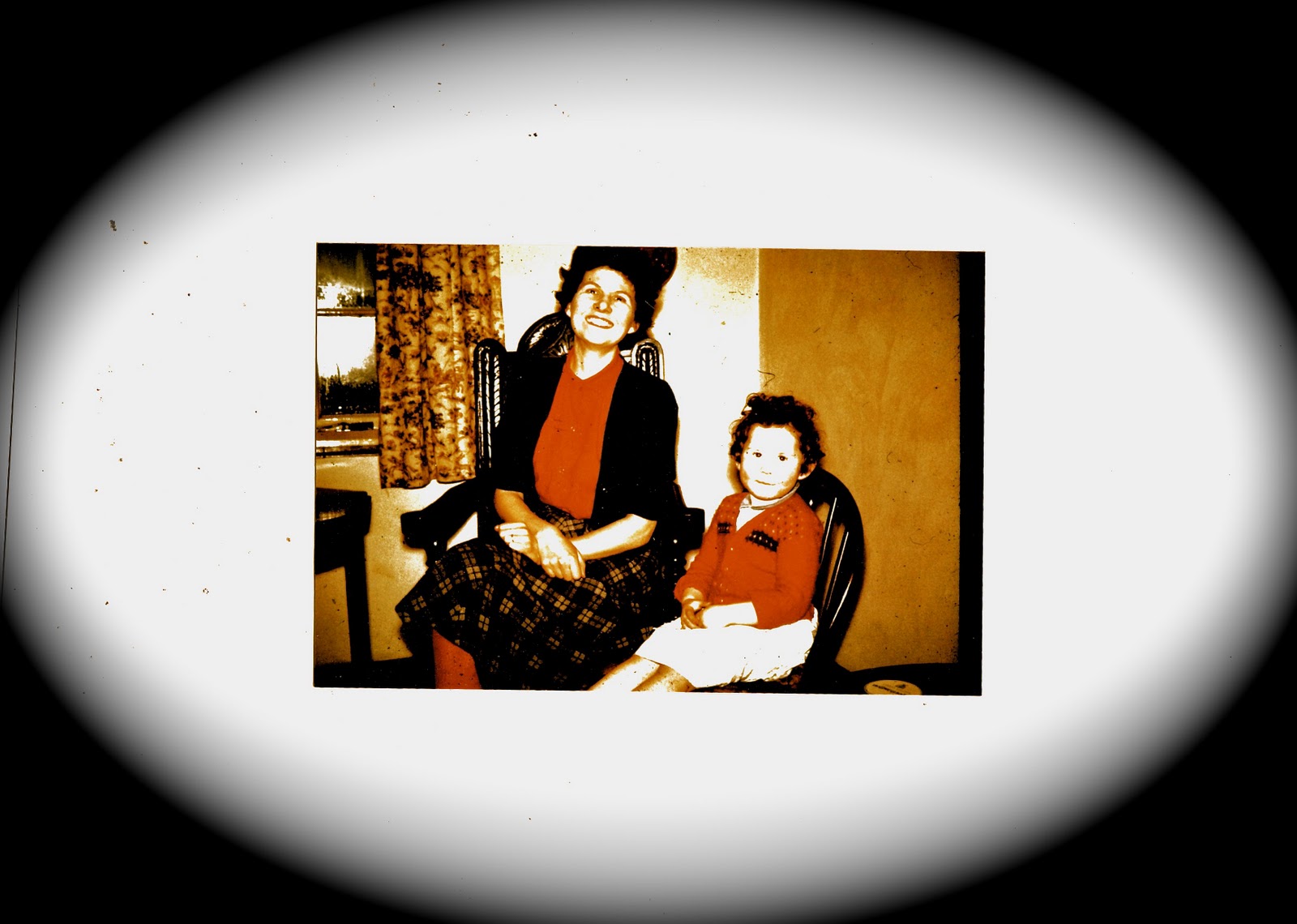
There really is only one image I could end this on tonight and I am sorry that it is a repeat but it says it all.


a


Enhanced by Zemanta

Tuesday, 6 July 2010

DESMOND DOIG


I heard this story from both sides: Desla's and my mother's. Her version was that she was visiting a friend at the Harrington Nursing Home, in Calcutta. She was coming down the stairs and saw this man talking to Joyce the matron. She knew who he was - had read all his articles, had just finished the book he had written with Ed Hillary, 'High in the Thin Cold Air'. Desmond was in fact visiting a friend Bhanu Bannerjee who had lost some toes in the expedition to frost bite. She told that she knew she had to meet this man, and she flew down the stairs and acting somewhat like a Take That fan, grasped his hand and told him how much she liked his work and admired him. She said he looked a little disconcerted but said, "You must come and have coffee sometime." He then made his farewells and left. The next morning she arrived at his flat, very early, for coffee. He had been asleep, naked, and came to the door clasping the fur of blue bare to cover his modesty.  From that moment on they were soulmates.

Desla told me the same story from his perspective. He said he had never seen anybody more alive in the moment than my mother that day at the Harrington. He was wary of memsahibs and so was polite but thought she would count having met him as enough. Memsahibs did not turn up for coffee at 9.30 and not blink an eye at a naked befurred mountaineer. She, however, did. He said that Joy was her name and the way she lived. Pure Joy.

For many, many years Calcutta thought they were lovers. I know I fought some strong battles with arrogant little expat schoolboys who thought to make fun of it. I certainly hit one. They were, of course, not. Desmond was not really a ladies man. Much to my mother's disappointment. She tried. Many times. As they grew older however she was happy to simply have his love. He said to me that if he had ever wanted a woman it would have been her.

Such a love story. So I grew up with a second father. A man of wit and intelligence, great charm, great talent. He was an artist, a journalist, a mountaineer and, when I did a google search last night, the term that kept coming up was 'renaissance man'. Perhaps one of the last.

Please understand that my father, although a little confused, was a good friend of Desmond's and there was never really any jealousy. The only time he put his foot down was with the release of 'Sergeant Pepper'. Desla had a party, a hippy party where we all dressed in bright florals and danced madly to 'Lucy in the Sky With Diamonds'. One of my father's pals was there, a very proper man Pierson Surita, and we pretended to take LSD by popping prettily decorated aspirin in our  mouths. Pierson went straight to my father the next day and there was a fuss. But it was so funny - I remember the two of doubled over with laughter - thrilled at their own wickedness. At that time my mother didn't drink and I don't think I ever remember Desla having a drink. They were, as they said, "high on life".

There is too much to say in a blog: days on the river when the West Bengal government gave him a boat to go up river and sketch the old houses of the Raj, days in Kalimpong where a picnic would become an adventure, stories would be told. In Bhutan telling me about the Dzong in Pairo, climbing up to Taksung and finding an old lama who had sat for most of his life gazing at the perfect view for meditation. Parties, dancing - my mother and he doing the 'Calcutta Grind' at the Grand Hotel. As I am writing this my eyes are filled with tears: it was a golden time.

I could go on and on - the Statesman, the sketches,, 'An Artist's Impression, the founding of the Junior Statesman - India's first youth magazine. He was a remarkable, special and deeply loved man. When he died it was announced on the Free Tibet radio station. He was a mountain man and one of those golden people who are only given to us for a short time.

I had a dream about two years after the death of my mother where she came to me and told how happy she was, she and Desmond. But they rather thought they might return to us in a few years, there was more living to be done. I'm waiting.


Monday, 5 July 2010

Mountains and aunties


When I was growing up it was considered impolite to call close friends of your parents anything other their names, Mr or Mrs Whoever or, you called them auntie or uncle. I therefore had a myriad of aunts and uncles who were no relation whatsoever but still gave a young child a sense of extended family.


Every summer, until my mother was accused of being a spy and refused a permit, we went to the beautiful Kalimpong for three to four weeks and stayed at the Himalayan Hotel. It was run by three ladies, daughters of David Macdonald a former British Trade Agent in Gyantse, Tibet. They were what they called, "a Himalayan cocktail", a combination of Scot, Tibetan and Lepcha. They were remarkable women.
Auntie Annie, in the picture, was Annie Perry, she had married Fred and he had died sadly all too long ago. She wore, as all three did, black trousers and brightly coloured silk shirts and, always bright red nail polish. 


To arrive at the hotel after a tortuous drive up from the plains climbing to 4,500 feet and to see the building and far off Kanchenjunga and then to hear, "Hi, hi", and be met with bloody Marys for the adults and nimbu pani for me. Oh, that was such a joy and excitement.

How could anyone not feel blessed to see those mountains? They weren't always on view of course, the mist faded in and around them giving us brief expectations of what was to come and then suddenly it cleared  and from the garden, under the camellia tree we would sit and watch, entranced.

The Kalimpong years were a time of golden childhood memories. My mother took me everywhere with her and I was always more surrounded with adults than children. Although at eight I had a Tibetan boyfriend called Tenzing - he was nine and we held hands a lot. But to be child surrounded be adults means that a certain level of behaviour is expected. My second father Desmond Doig, always said, "Don't be boring darling." and I have endeavoured to follow his advice ever since. Not being boring meant not bothering the grown ups when they playing cards, discussing politics or observing that most Indian of customs - the afternoon rest.

Auntie Annie never rested but would be out in her flower garden and always available for a chat and to tell the name of the flowers or to teach some rude music hall song she remembered from her youth - 'Roll me over in the clover, roll me over, lay me down and do it again." I didn't know what it meant but I sang it with great gusto at every opportunity causing giggling embarrassment all round.

Auntie Vicky, the middle auntie, was the intellectual one. Because I was missing school she gave me lessons in the mornings, writing of course and Babu French which I still speak I suspect with a Bengali accent as she did. She remembered the extraordinary Alexandra David Neel arriving in Gyantse dressed in lama's robes and being very imperious and demanding, and then adding with a sly smile, and smelly. Auntie Vicky was 'my' auntie, Annie my mother's and the youngest sister, Vera was loved dearly by my sister.

Auntie Vera was the other port of call in the afternoons - she didn't sleep but would sit reading or writing letters. She was very fat and very pretty and gentle. Her sisters could still make her cry. She was the beloved confidant of the Queen of Bhutan and this gave her a certain grandeur. She taught me to crochet and told me of ancient scandals to do with the Bhutanese and the Sikkimese; sadly, none of which I can remember or even understood at the time. I wish I could. One winter she came down to Calcutta with Ashi Kesang, the queen and they were at performance given by the Bolshoi that I had managed to force my sister in to taking me to. (My family never understood my love of ballet) In the interval Auntie Vera beckoned us to the box and of course we went. I curtsied, my sister pinched me. But Auntie Vera was in her element, loved and beautiful in that moment. She told she had seen Anna Pavlova dance there at the New Empire when she was my age and how beautiful she had been.

And for those of you that think all this has gone, the picture above is the hotel today run by one of the aunties real nephews. What a lucky, lucky little girl I was.


http://www.himalayanhotel.biz/english/index.html